

When we first moved to Delaware, I bought a book called So You Are Moving to Delaware. It was the kind of book that gives a newcomer little pieces of context, such as bits of history, famous residents, cultural landmarks, and the local chains that seem to dominate the state.
One part that stood out to me was the divide between rural and urban Delaware. Coming from Nebraska, that tension felt familiar. Nebraska has its own version of this divide, with Omaha and Lincoln on one side and the rest of the state on the other. Omaha makes the distinction even sharper, since some people there seem to consider Lincoln rural too.
Maybe that should have prepared me for Delaware, because the state capital, Dover, sits in the more rural part of the state.
Dover was established in 1683 and, as of 2024, had a population of just over 40,000. It is home to Dover Motor Speedway, Delaware State University, an HBCU, and Dover Air Force Base. It also has a historic downtown and sits between Delaware’s most prominent city, Wilmington, to the north, and the beaches to the south.
For most of our time in Delaware, though, Dover was just a place we drove past. On our way to the beaches, we never really stopped there. The distance between Newark and the beaches was short enough that we never needed gas, food, or much of anything else along the way. Dover existed mostly through the car window.
Then, in April 2024, we finally decided to stop. It started when my wife saw an ad for the Bouglione Circus. It had been years since I had gone to a circus, and maybe that is another thing newer generations will not experience in quite the same way. I have fond memories of circuses, state fairs, and county fairs from childhood. The lights, the snacks, the noise, the sense that something unusual had arrived in town.
At the same time, I had always wanted to visit Dover for two reasons. First, I wanted to see the Air Mobility Command Museum at Dover Air Force Base. Second, I wanted to see the state capital itself. So, on a Saturday in April, we made a day trip to Delaware’s capital.
After coffee, we drove down Highway 1 from Newark to Dover. It is a familiar drive, beginning with the crossing of the canal that separates urban and rural Delaware, passing Dover Motor Speedway, and eventually reaching Dover Air Force Base.
The Air Mobility Command Museum traces its origins to 1978, when members of the base decided to restore an aircraft. They ended up restoring a B-17G, also known as the Flying Fortress. The B-17 was recently featured in Masters of the Air, the Apple TV limited series produced by Tom Hanks and Steven Spielberg.
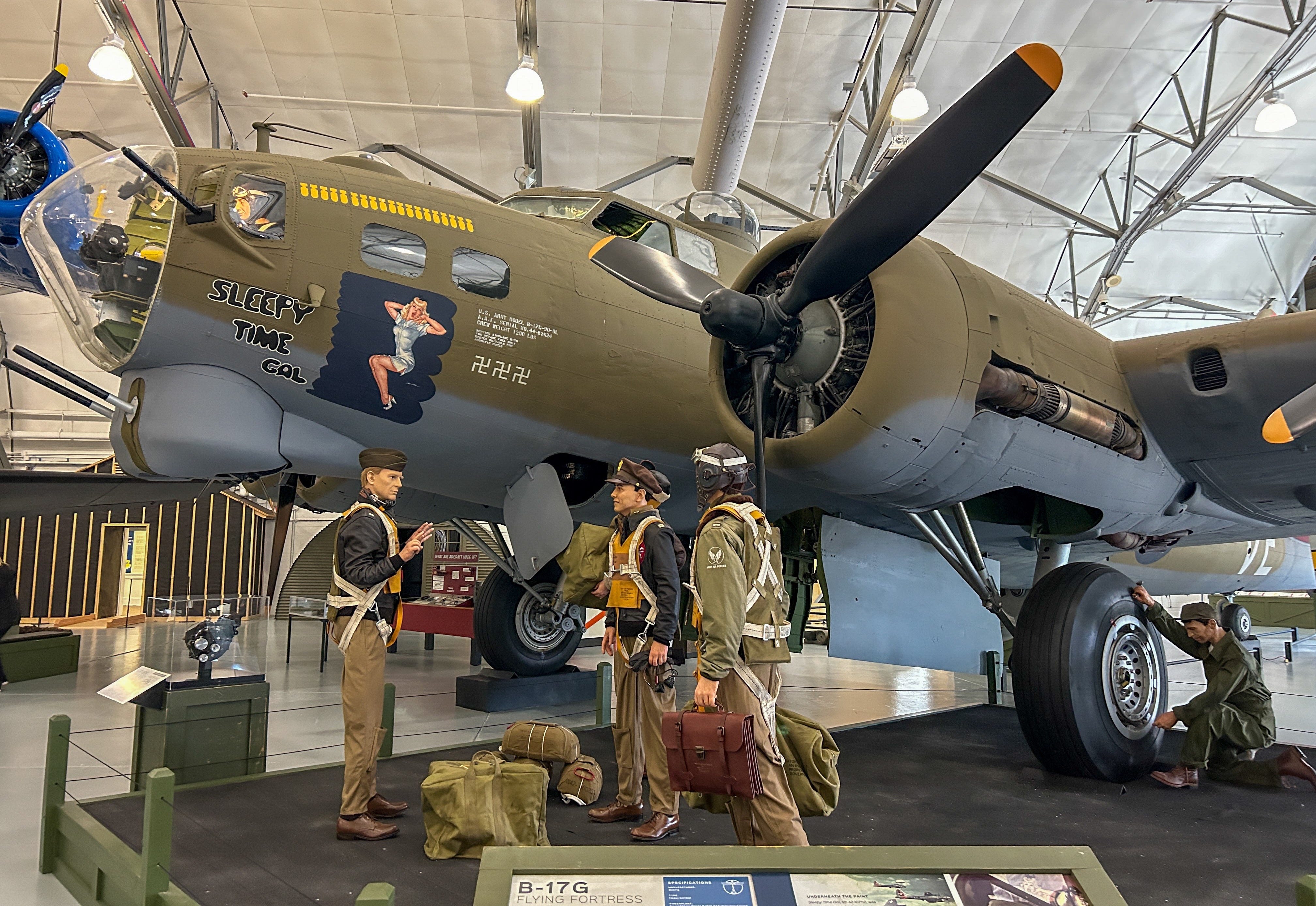
The series is based on the book of the same name, which I think is one of the most important works of history I have read. It does more than showcase the B-17. It traces the history of aerial warfare from its beginnings through World War II and shows how confident assumptions can carry enormous consequences.
When the B-17 was developed in the 1930s, it was among the fastest and highest-flying planes of its time. Because of that, American planners initially believed it would be nearly untouchable. The war proved otherwise. That history feels like a lesson worth revisiting, especially for leaders who make decisions that can alter or destroy countless lives. I may come back to that idea in a separate essay someday.
After spending time in both parts of the museum, we made our way to the Capitol grounds. The Old State House, now a museum, was open that Saturday. Built in 1791, it served as Delaware’s state capitol until 1933.
I am always fascinated by old public buildings. There is something about the writing desks, the rows of wooden seats, the old floors, and the stairs that creak beneath your feet. You feel as if you have stepped backward in time.
It also made me think about how quickly technology changes. I grew up in a world where writing desks still felt familiar. Now, in a place like the Old State House, they seem almost as ancient as the Constitution itself.
We did a little shopping in the historic downtown area, but before long, it was supper time, so we left to get steak. After supper, we made our way to the circus.
Walking into the tent brought back a wave of nostalgia. As a kid, I remember a circus appearing once or twice a year. A tent would go up, and eventually we would go see the show. I am sure there were toys with flashing lights, peanuts, popcorn, and all the usual excitement.
I also remember the animals. At one point in my childhood, I even rode on the back of an elephant. This circus did not have animals, which is probably for the best. That is not a criticism of the circus we attended. If anything, it is a recognition that I have changed. As I have gotten older and hopefully a little wiser, I have come to believe that animals should not be forced to live in captivity for our entertainment, especially animals like elephants, whales, and tigers.
The circus itself was entertaining. There were acrobats, stunts, and feats of balance and strength across two acts. It had the feeling I remembered from childhood, even if the details had changed.
After the show, we drove home. It had been a full day. Museums, the Capitol, downtown Dover, supper, and the circus. More than that, it was a day of finally stopping in a place we had passed so many times before.
Sometimes the places we drive through are worth a day of their own.