

September flew by in the blink of an eye. We celebrated birthdays, visited family, and the Dark Lord kept us on our toes. In between, I finished a few books, including my first children’s book with the Dark Lord, The Very Hungry Caterpillar.
Harry Potter and the Half-Blood Prince
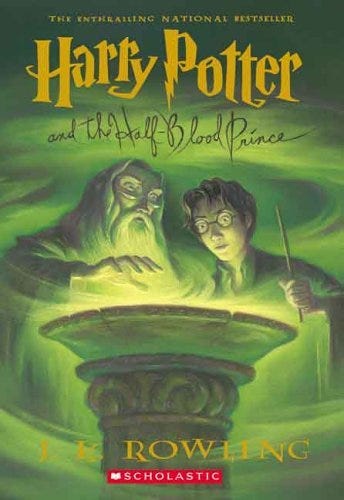
The first book I finished was the sixth Harry Potter book, Harry Potter and the Half-Blood Prince. This was my third time reading it. Unlike the fifth book, Harry Potter and the Order of the Phoenix, I actually liked this one on my first read.
I’m sure anyone reading this already knows the story. This was probably one of the last books I remember people waiting outside Wally World at midnight to get their hands on. With a successful movie adaptation to boot, the story is familiar to almost everyone.
In short, Harry returns to Hogwarts after the Wizarding World finally acknowledges that Voldemort is back. He takes special lessons with Dumbledore, who introduces him to Horcruxes. At the end, Snape kills Dumbledore in the tower in front of Harry, setting the stage for the final book.
So, I will not go into much more detail about the story itself. I’ve already mentioned that this is one of my favorite books in the series. Instead, I want to discuss a moment that stood out to me and how it relates to my own thoughts about the world.
It comes from a quote Hermione says to Ron and Harry.
“Dumbledore says people find it far easier to forgive others for being wrong than being right.”
I think this quote says a lot about America. No one ever wants to be wrong. Rather than acknowledge they might be mistaken, people would rather keep defending their position, even when the facts suggest otherwise.
I think this is one of the problems with how we teach slavery and other important events in American history. There seems to be this belief that we cannot speak badly about our country in high school classrooms. That we cannot criticize America for the wrongs it committed in the past.
Instead, students are often given a rose-tinted view of American history. The class struggles, slavery, and American interventions across the globe are either minimized or presented in ways that make the country look better. Someone going through American history in high school could easily leave believing we are the greatest nation ever.
I think part of this comes from confusing patriotism with nationalism. Patriotism is loving your country while recognizing its flaws and wanting to improve it. Nationalism, on the other hand, places your country’s identity and interests above those of other nations, sometimes with the belief that your country is inherently superior. In America, I think we often confuse the two. Criticizing our past does not make someone less patriotic. In fact, acknowledging those mistakes could be one of the most patriotic things someone can do.
And maybe that is what makes Dumbledore’s observation so interesting. It is difficult enough for an individual to admit being wrong. But when that same attitude becomes part of how a country understands its history, admitting past mistakes becomes even harder. Rather than accept criticism and learn from it, we sometimes value being right more than understanding what actually happened.
I originally gave the sixth book a five out of five rating, and I still do. One of the best things about Harry Potter is that, despite all the nostalgia, it never disappoints when I reread the series. Many of the things we remember fondly from childhood are not quite the same when we return to them years later. Food tastes different, games play differently, and movies sometimes lose their appeal. But for me, Harry Potter has never lost its charm.
The Nineties by Chuck Klosterman
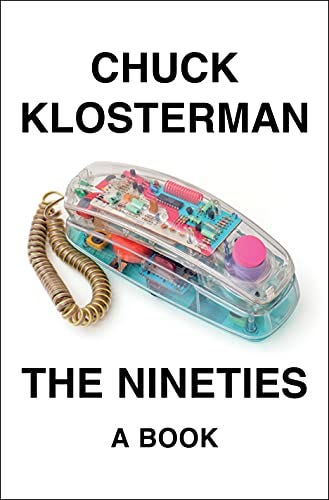
The other book I finished, not including the children’s books I read with our little Pumpkins, was The Nineties by Chuck Klosterman.
To be serious, I expected the book to be full of nostalgia, something that would let me reminisce about growing up in the nineties. Instead, Klosterman takes a deeper look at the decade, examining the attitudes, entertainment, politics, and cultural changes that helped shape the world we live in today. And while it wasn’t quite the book I expected, it was still fun to remember how different the nineties were.
The nineties were an important decade for Generation X. I also grew up in the nineties, but my experience was probably quite different from what someone in Gen X remembers. As a millennial, I was still a kid for most of the decade, while many members of Gen X were already entering adulthood. Still, I recognized plenty about the decade.
One of the first things that stood out to me was Klosterman’s discussion of the attitude that defined Generation X. He describes an “adversarial relationship with the unseemliness of trying too hard.” He goes on to explain that doing nothing on purpose was a valid option, and that a particular kind of coolness became more important than almost anything else.
Perhaps most interesting was his discussion of selling out. The worst thing someone could be was a sellout, not necessarily because money was involved, but because it meant someone desperately wanted to be popular. Simply wanting approval could make someone seem terrible.
Basically, Gen X celebrated not trying too hard to fit in. Being an outcast was cool. Doing nothing was cool. Working too hard was not cool. There was this strange line where you wanted to put in effort, but never so much that people could tell you were trying.
And I wonder how that attitude shaped the world we live in today. Maybe Gen X saw what the world would eventually become, where billionaires seem to control everything, even though we continue to claim that most of the world lives in democracies. Or perhaps that same attitude helped create the world we have today. If caring too much was considered uncool, why bother fighting against anything?
Maybe every generation has its contradictions. For Gen X, though, not trying seemed particularly amusing, and that attitude carried into the decade’s entertainment.
One example Klosterman discusses is a radio prank called Rock, Rot & Rule. The show featured a supposed author taking calls about a fictional book in which he classified musical artists into three categories. The premise was ridiculous, but that was the joke.
The show is available on YouTube, and I would recommend listening to it. However, you really have to sit through the entire thing to appreciate the humor. I had never heard of it before reading this book, but after listening, I was surprised by how much I enjoyed it.
And it got me thinking about something else we do as humans, especially now that everyone has a platform on the internet. We have this ridiculous need to rank everything. Whether it is music, movies, athletes, or television shows, we always seem determined to figure out which one is the greatest.
Take basketball, for example. People are constantly trying to create a Mount Rushmore of the greatest NBA players. Most people would include Michael Jordan and LeBron James, but who would take the other two spots? Or would someone leave one of them off entirely? And how do we compare players from different generations?
Do we look at statistics? Championships? Individual accomplishments? Or should we consider how much a player helped grow the game? The NBA became increasingly popular during the eighties, largely because of Magic Johnson and Larry Bird. But the league soared in popularity because of Michael Jordan. Should that matter when ranking the greatest players?
The point is that we spend so much time trying to determine who or what is the greatest, even when there is no objective way to settle the argument. And perhaps that is what makes something like Rock, Rot & Rule so amusing. It takes our desire to classify everything and turns it into a joke.
Another aspect of the nineties that Klosterman discusses is how people could sit around with friends, argue about something, and never actually determine who was right. Think about that for a moment. When was the last time you sat around with friends, debated a question, and left it unanswered?
Today, someone will inevitably pull out their phone and ask Google or AI for the correct answer. But back in the nineties, the debate stayed in the bar. People could disagree for hours, and everyone would eventually go home without knowing who was right. There was something enjoyable about that uncertainty. And maybe that is another contradiction of the decade. People were comfortable not knowing everything, but that also meant they were comfortable believing things that might not have been true.
And perhaps that is one of the biggest differences between then and now. In the nineties, people could go through life without having answers to everything. Today, we have nearly unlimited information available at our fingertips, yet we still argue about what is true. Having more information has not necessarily made us any better at understanding it.
Beyond generational attitudes, Klosterman spends considerable time examining how television and the news changed our relationship with the world. One observation is that media presentations of the world have become increasingly detached from how the world actually is. He discusses the Gulf War and how television networks provided prolonged live coverage of the conflict.
We tend to assume that watching something happen live makes it more meaningful. Witnessing an event as it unfolds should create a stronger emotional connection. But Klosterman argues that the opposite sometimes happened. When viewers watched endless footage of the Gulf War, the events began to lose their meaning. So much was happening on screen, but without a clear story to follow, it became difficult to understand what any of it meant.
He makes a similar observation about the O.J. Simpson chase. Television networks interrupted regular programming, including an NBA Finals game, to broadcast the chase live. Yet the actual event was far less dramatic than the coverage made it seem. I found this particularly interesting because it made me think about how we understand the news.
As humans, we have always connected with stories. Stories give events meaning, provide context, and help us remember what happened. But when we are presented with raw footage, without any explanation or narrative, it can become just another collection of images on a screen. And when we do not emotionally connect with something, we are less likely to remember it.
The news has never been only about presenting facts. Good journalism takes those facts and helps us understand why they matter. Anyone can read a list of facts, but that alone does not necessarily make for meaningful journalism. It needs context, an explanation of what happened, and a sense of why anyone should care.
Perhaps this is one of the biggest changes that began in the nineties and continues today. We have more access to information than ever before, yet having access to information does not necessarily mean we understand the world any better. In some ways, we might even be more disconnected from the events happening around us.
Another interesting aspect of the decade was the enormous amount of television programming that existed simply because networks needed something to put on the air. There were shows about almost everything. They even made an entire television show, Seinfeld, that was famously described as being about nothing. People spent hours watching television, and it often became our primary way of getting information about the world. Yet, even though we could watch events unfold live, we sometimes felt less connected to what was actually happening.
Klosterman also discusses how the rise of VHS rental stores during the eighties helped shape the movies that became popular in the nineties. People could now easily choose from a wide selection of films and watch them at home. That changed not only how people watched movies, but also what kinds of movies studios were willing to make.
Of all the pop culture subjects he covers, I found The X-Files particularly interesting. Klosterman discusses how conspiracy theories existed long before the internet made them part of everyday political conversations.
Radio programs like Art Bell’s Coast to Coast AM attracted people interested in aliens, government conspiracies, and other unusual ideas. But these programs often treated conspiracy theorists as entertaining outsiders. The X-Files, however, brought those ideas into prime-time television.
Here was a popular show about a man running around trying to prove that aliens existed and that the government was hiding the truth. And millions of people watched it. Klosterman argues that The X-Files did more to normalize conspiracy thinking than the late-night radio programs ever did.
I find that fascinating, especially today. Conspiracy theories are no longer confined to late-night radio shows or small groups of people discussing aliens. They have become part of mainstream political conversations. Ideas once dismissed as ridiculous are now regularly discussed as if they deserve the same attention as facts.
And there is something particularly ironic about Fox having aired a television show centered on government conspiracies, while Fox News would later become a major force in American political media. Of course, the television network and the news channel aren’t the same thing, but the connection is still worth thinking about.
I went into the book expecting a nostalgic trip through my childhood. Instead, I found myself thinking about how different generations view the world, how we consume information, and how nineties culture continues to influence us. Perhaps that is what made the book more interesting than I expected.
Klosterman covers many other subjects. However, if I listed them all, I would be writing this review for another few months. Instead, I wanted to focus on some of the points I found most interesting.
I gave The Nineties four out of five stars, and I would recommend it to anyone interested in the decade. Personally, I think reading about a decade can be more enjoyable than watching a documentary. It gives you more room to stop, think, and consider how the events connect to your own experiences.
I want to leave with one final quote from the book.
“No stories were viral. No celebrity was trending. The world was still big. The country was still vast. You could just be a little person, with your own little life and your own little thoughts. You didn’t have to have an opinion, and nobody cared if you did or did not. You could be alone on purpose, even in a crowd.”
I think that quote captures something about the nineties that is hard to explain to anyone who grew up with the internet. There was a time when you didn’t have to know what everyone else was doing. You didn’t have to join every conversation or have an opinion on every event. You could simply live your life without constantly worrying about what was happening elsewhere.
And maybe that is the part of the nineties I miss the most.